The transformation of the labor market is creating new ways of working and, with them, new challenges. The growth of independent work and the gig economy opens up opportunities for thousands of people, but it also highlights gaps in information, access to services, benefits, and social protection.
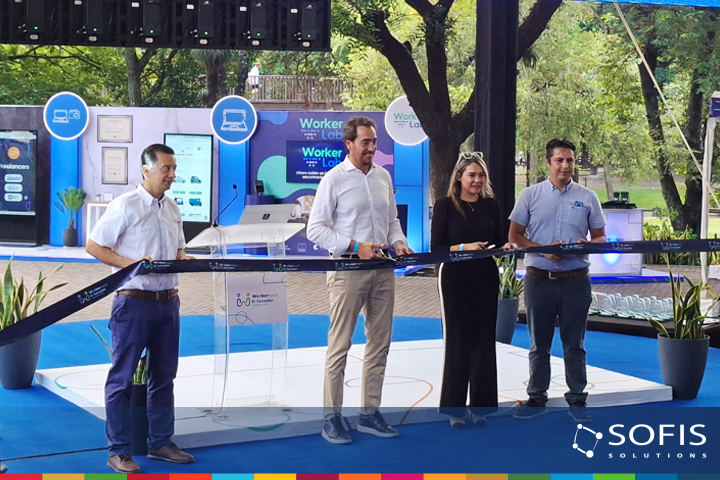
In El Salvador, CASATIC promotes WorkerLab, a digital platform developed by Sofis Solutions that seeks to strengthen the community of independent and informal workers and create new opportunities for collaboration among workers, businesses, public institutions, and cooperation organizations.
The initiative emerged within the framework of the WorkerTech Project co-financed by IDB Lab and European Union, whose objective was to improve the quality of life of independent workers through technological innovations.
From CASATIC they explain that the starting point was identifying a reality that still has limited visibility:
“The issues it seeks to address are the lack of visibility and characterization of independent and informal workers, the absence of information about services and benefits for people who work independently, and the lack of collective organization.”
Making a Changing Labor Reality Visible
One of the challenges of the gig economy is that those who participate in it are not always adequately reflected in traditional labor market information mechanisms.
WorkerLab seeks to help close this gap by generating and making available up-to-date information on independent and informal work while also creating a space where different stakeholders can connect.
The need to move in this direction is also related to the particular conditions faced by these workers. From CASATIC they point out:
“The main challenges faced by independent workers are the lack of benefits and social protections available to formal workers, such as access to credit, training, pension savings plans, or healthcare services.”
However, independent work does not necessarily imply economic instability. CASATIC highlights the need to “make visible hundreds of thousands of independent workers who have job stability and steady incomes,” so that companies can take them into account when designing and offering services and benefits.
A Platform for Workers, Businesses, and Institutions
Against this backdrop, WorkerLab is positioned as a meeting point for different stakeholders in the ecosystem.
The platform allows workers and businesses to register and access different services and benefits. Its features include information about workers and businesses, surveys, training, and access to specific studies on independent work.
It also incorporates background from the WorkerTech Project, statistical data shared with the Ministry of Labor, and opportunities to connect with government agencies and institutions.
CASATIC summarizes the platform's proposal as follows:
“WorkerLab is a digital platform that aims to strengthen the community of independent and informal workers by providing access to information about services and benefits available to this group of workers and publishing relevant labor market data.”
However, the initiative is not aimed solely at workers. The information generated also seeks to provide value to businesses, public institutions, and cooperation organizations.
For workers, it means having a point of access to information, services, benefits, and opportunities. For businesses, it represents an opportunity to better understand this segment of the labor market and develop products and services tailored to its characteristics. And for public institutions and cooperation organizations, WorkerLab can become a source of information and a space from which to coordinate initiatives related to employment, economic inclusion, and the future of work.
From Data to New Opportunities
One of the core components of WorkerLab is the generation of information.
Having up-to-date data on independent work makes it possible to gain a more precise understanding of who makes up this group, what their characteristics are, and what needs they face.
This information can be relevant not only to workers themselves, but also to businesses interested in developing services for this segment and to public and cooperation organizations working on employment and the future of work.
In the words of CASATIC, WorkerLab also seeks to “publish up-to-date data on independent work” and generate opportunities for strategic partnerships with businesses and cooperation organizations to plan and implement projects related to this labor reality.
In this way, data ceases to be merely an output of the platform and can become an input for generating new initiatives.
Strengthening the Gig Economy Ecosystem
ASATIC identifies four major expected outcomes for WorkerLab: having more data and information about independent and informal workers, strengthening their communities, increasing the number of businesses offering services and benefits aimed at them, and “energizing the gig economy ecosystem.”
The platform's growth will be assessed based on specific indicators. These will include the number of registered workers and their actual use of the available services and benefits, as well as the number of subscribed businesses and those using WorkerLab.
This introduces a fundamental aspect of the project: its success does not depend solely on having a technology platform, but on creating an active community of workers, businesses, and institutions around it.
A Look Toward the Future of Work
The vision of CASATIC, IDB Lab and European Union for WorkerLab goes beyond this first stage.
In the medium term, the organization expects the platform to become an instrument for channeling projects together with government institutions and cooperation organizations.
The ambition behind this evolution is particularly reflected in one of the interview responses:
“The medium-term objective is for WorkerLab to become a tool for channeling special projects with government institutions and cooperation organizations, and for the available data to be useful in developing proposals to implement initiatives that help our countries anticipate the future of work and provide better working conditions for gig workers.”
This perspective makes it possible to understand WorkerLab as more than a service platform. The combination of community, information, and institutional coordination can progressively turn it into an instrument for understanding transformations in the labor market and designing responses to them.
A Look Toward the Future of Work
For Sofis Solutions, participating in the technological development of WorkerLab represents an opportunity to contribute to an initiative that addresses one of the emerging challenges of digital transformation: how to support new ways of working with better services, information, and mechanisms for coordination.
The project also reflects a vision that guides our work: digital transformation acquires true value when technology makes it possible to better understand problems, connect the stakeholders involved, and generate new capabilities to respond to them.
WorkerLab is moving precisely in that direction: using data, technology, and collaboration to make an existing labor reality visible and help generate better opportunities for those who are part of it.